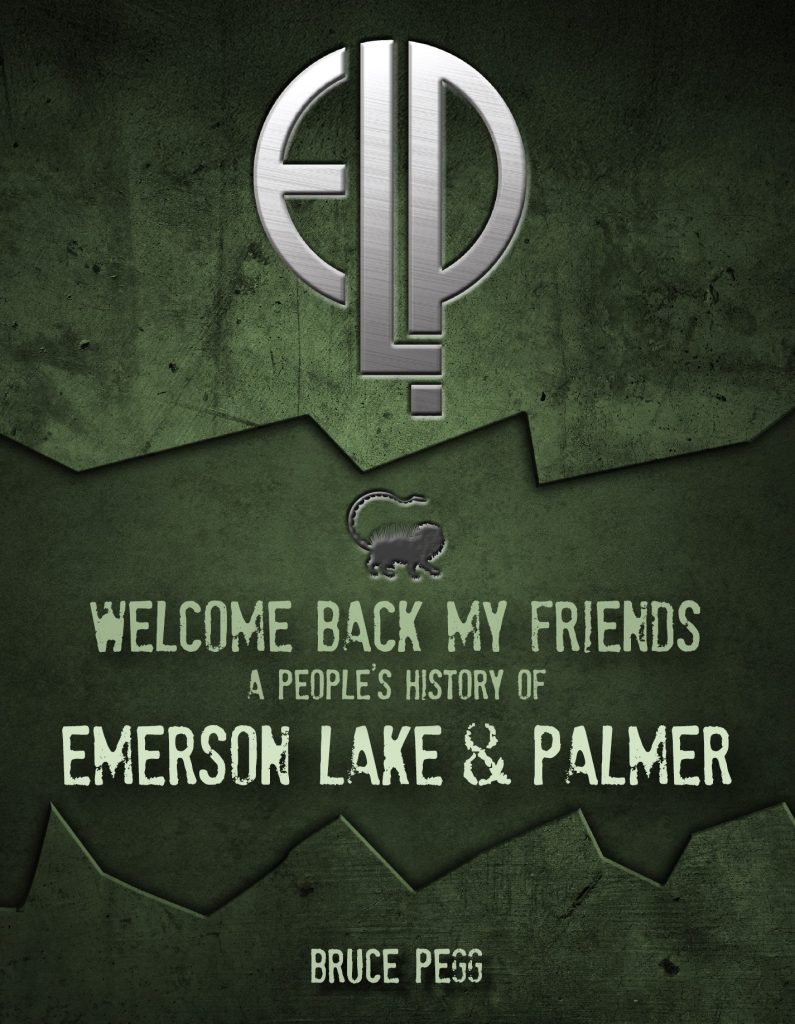
In Welcome Back My Friends, author and music historian Bruce Pegg builds a living, breathing oral history of Emerson, Lake & Palmer—one of prog rock’s most daring and divisive trios. Rather than another chronological biography or technical deep dive, Pegg opens the microphone to the fans themselves—370 of them—whose memories capture the band’s fire, spectacle, and excess from the ground up.
The book reads like a chorus of witnesses to a phenomenon that blurred the line between classical precision and rock showmanship. Each anecdote offers a different vantage point—whether from the front row of a 1971 Tarkus tour date or a reunion-era performance decades later. The result is an intimate mosaic, portraying ELP not as aloof virtuosos but as magnetic performers who made concert halls feel like cathedrals of sound.
A foreword by Carl Palmer lends the project authenticity. Palmer, the sole survivor of ELP, has spent the last several years fanning the flames of ELP with his brilliant tour, ‘The Return of Emerson, Lake and Palmer stage show among his other recent ELP-related endeavors.
Photographer Neal Preston’s 280-plus images transform the narrative into something cinematic while adding touches of whimsy.
Pegg’s editing ensures the fan voices retain their individuality yet flow with the energy of a live setlist—dynamic, unpredictable, and deeply human.
Pegg’s previous works, from Go In’ Down De Mont to his studies of Chuck Berry, reveal his knack for grounding legends in lived experience. Here, that instinct makes Welcome Back My Friends a celebration rather than a shrine. It’s less about the myth of ELP and more about how the music reverberated through generations of listeners who saw themselves reflected in the bombast.
By the end, you feel what made Emerson, Lake & Palmer larger than life wasn’t just the Moog explosions or 10-minute suites—it was the shared experience of awe. Pegg reminds us that the legacy of ELP, like the best of prog, lives on not in the grooves of vinyl but in the stories that refuse to fade.
For fans of ELP, progressive rock history, or the culture of live performance, this book is an essential encore.