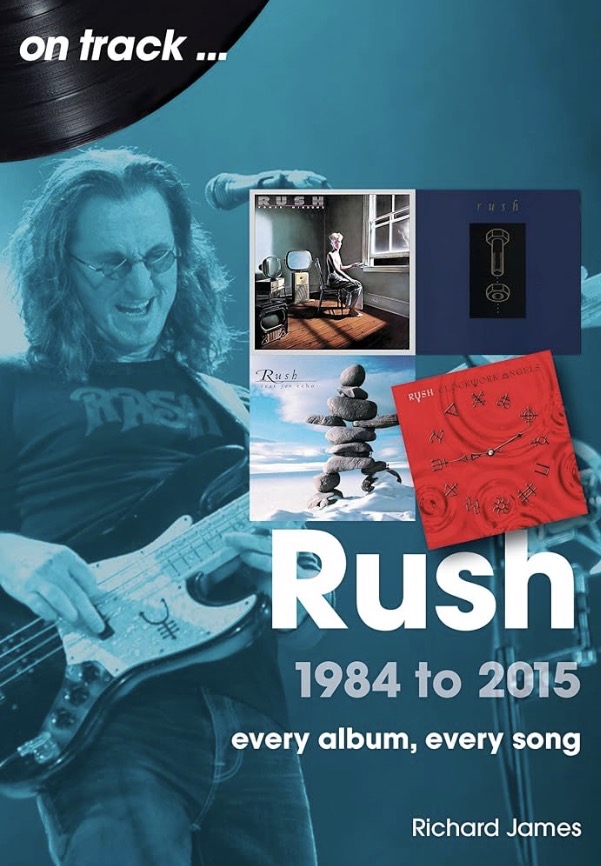
Rush 1984–2015: On Track by Richard James (Sonicbond Publishing); Every album, every song — and a band that refused to stand still
Richard James’ book arrives just in time as a companion to the reunited Canadian Prog-Power masters. The book jumps into the band’s heady days. By the time Rush hit Grace Under Pressure in 1984, they had already survived success, backlash, reinvention, and the impossible task of pleasing everyone. Rush 1984–2015: On Track picks up the story right there — not at the beginning, but at the moment where things got interesting again. Author Richard James understands that the second half of Rush’s career isn’t an epilogue; it’s a long, complicated second act.
This book is part of Sonicbond’s On Track series, meaning the structure is clear and disciplined: album by album, song by song. What elevates it is James’ willingness to treat so-called “controversial” records — Power Windows, Hold Your Fire, Roll the Bones— not as missteps, but as deliberate choices. Synths aren’t apologized for. Geddy Lee’s evolving role as bassist/keyboardist/frontman is contextualized, not debated. Neil Peart’s lyrics are tracked as reflections of adulthood, loss, and perspective rather than youthful certainty.
Counterparts and Test for Echo are framed as recalibrations, not retreats, while Vapor Trailsand Clockwork Angels are treated with the seriousness they deserve — albums shaped by grief, survival, and late-period ambition. The coverage of R40serves as a fitting coda, underscoring how rare it is for a band to end on its own terms. Albeit an end precipitated by an unknown and pending tragedy.
At 128 pages, this isn’t a sprawling biography, but that’s the point. It’s a focused listening companion, ideal for revisiting Rush’s later catalog with fresh ears. For longtime fans, it validates instincts they’ve held for decades. For skeptics of “post-Moving Pictures Rush,” it offers a compelling case to go back and listen again. It frames these later years in an interesting and thoughtful light.
Rush 1984–2015: On Track makes the argument that longevity isn’t about repeating yourself — it’s about evolving without blinking. Rush did exactly that, and this book documents it with clarity, respect, and just enough critical distance.